Insights & Resources

Practical, nervous-system-first strategies from a pediatric OT — for the adults raising, teaching, and protecting neurodivergent kids.

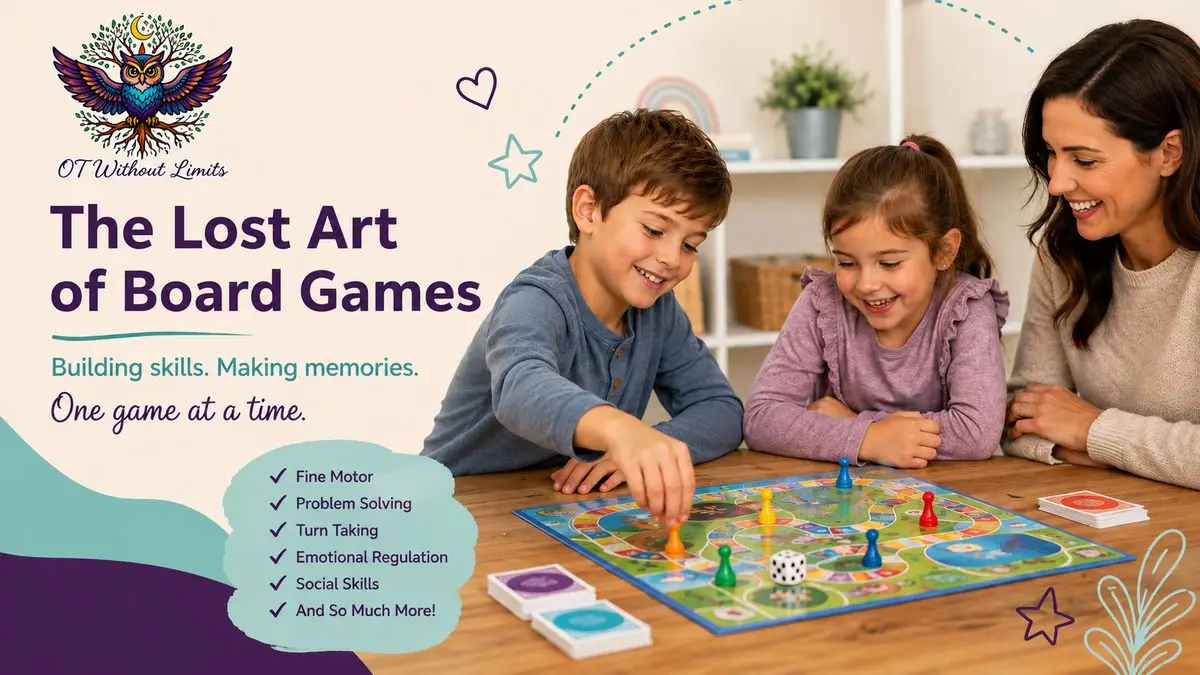
Children playing a board game with an adult, building fine motor, problem-solving, turn-taking, emotional regulation, and social skills through play.

The Lost Art of Board Games

Board games are more than just fun—they’re packed with opportunities for growth. From fine motor skills, attention, and problem-solving to turn-taking, emotional regulation, social connection, and even strength and endurance, discover why this simple form of play is an occupational therapy powerhouse.
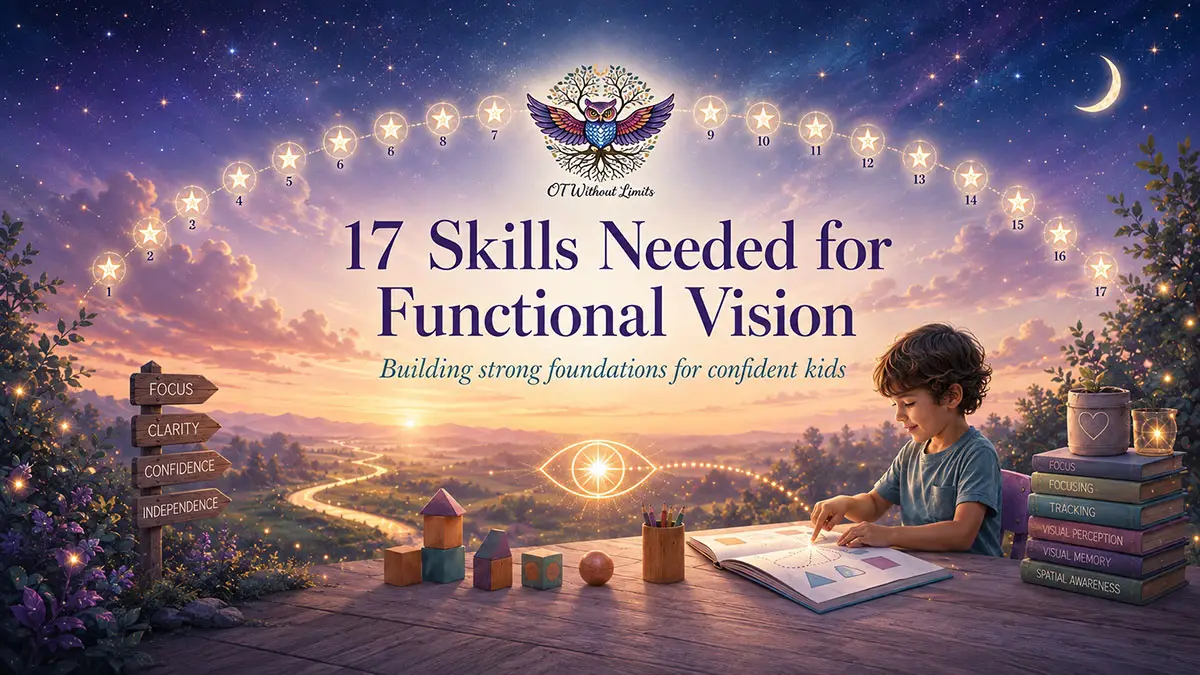
17 Skills Needed for Functional Vision

What Are The 17 Skills Needed for Functional Vision?

In everyday life, functional vision helps a child read, write, play sports, climb playground equipment, copy from the board, keep their place on a page, and move through busy spaces without feeling overwhelmed.

First Weeks of School: Parent Tips & Tricks

The first few weeks of school can feel exciting, exhausting, and overwhelming—for kids and parents. Simple routines, predictable transitions, movement, and a little extra patience can make a big difference. These OT-inspired back-to-school tips can help your child feel more regulated, independent, and ready to learn.
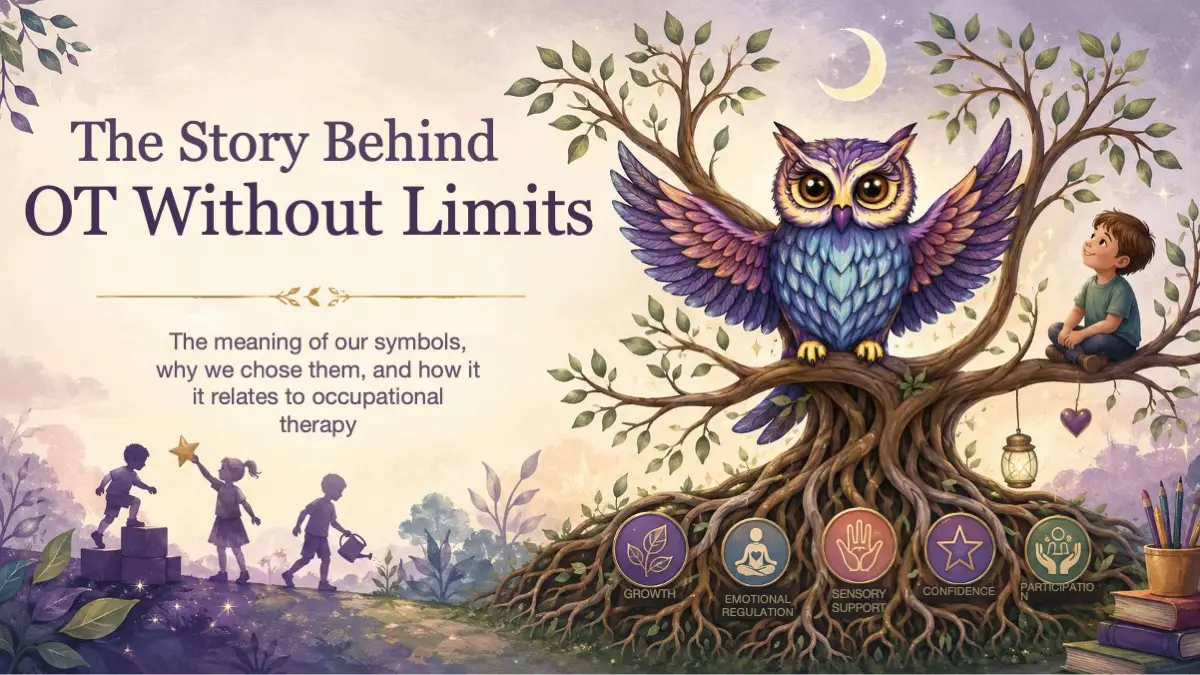
Colorful owl perched in a tree with visible roots, a crescent moon, and children exploring, symbolizing growth, regulation, sensory support, confidence, and participation.

The Story Behind OT Without Limits

Discover the story behind OT Without Limits and the meaning woven into its owl, wing tree, roots, moon, and vibrant colors. Learn how these symbols reflect a whole-child approach to occupational therapy- one that looks beneath the behavior, strengthens foundational skills, supports emotional regulation, and helps every child participate more confidently in everyday life.

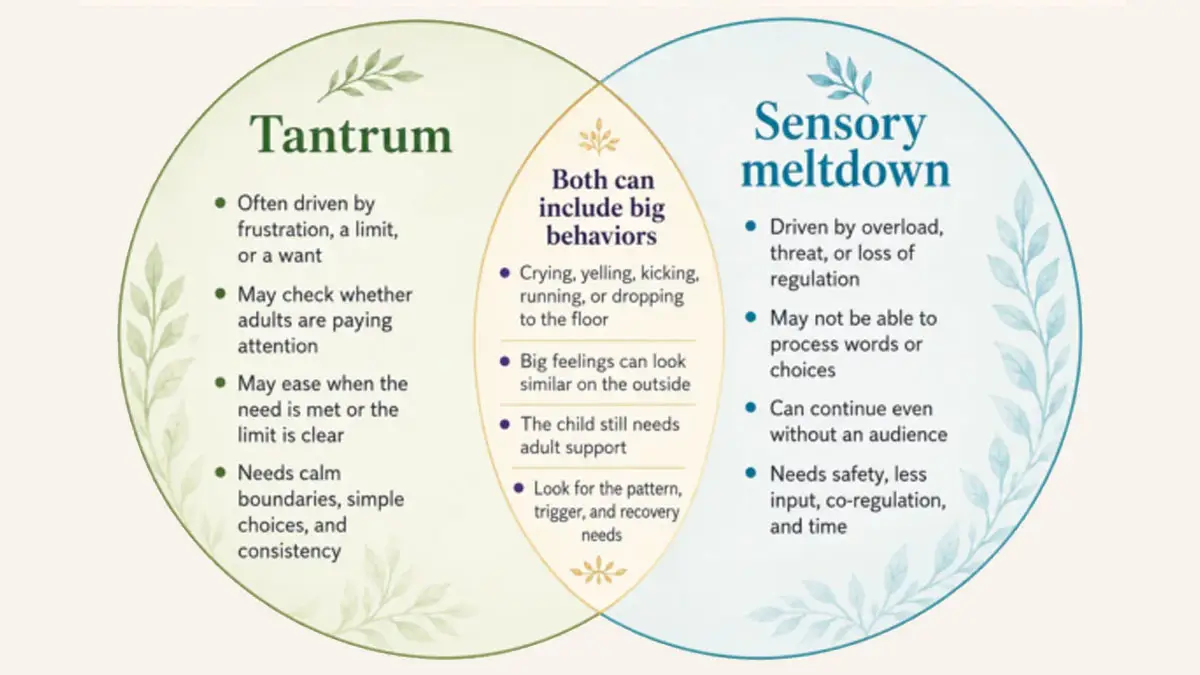
Venn diagram comparing tantrums and sensory meltdowns, including common signs, underlying causes, and supportive responses.

Tantrum vs. Sensory Meltdown: How to Tell the Difference and Support Your Child

Not every outburst is a tantrum. Sometimes a child is communicating a want, and sometimes their nervous system is communicating overload. Learning to recognize the difference allows parents to move beyond managing behaviors and begin supporting the underlying need.
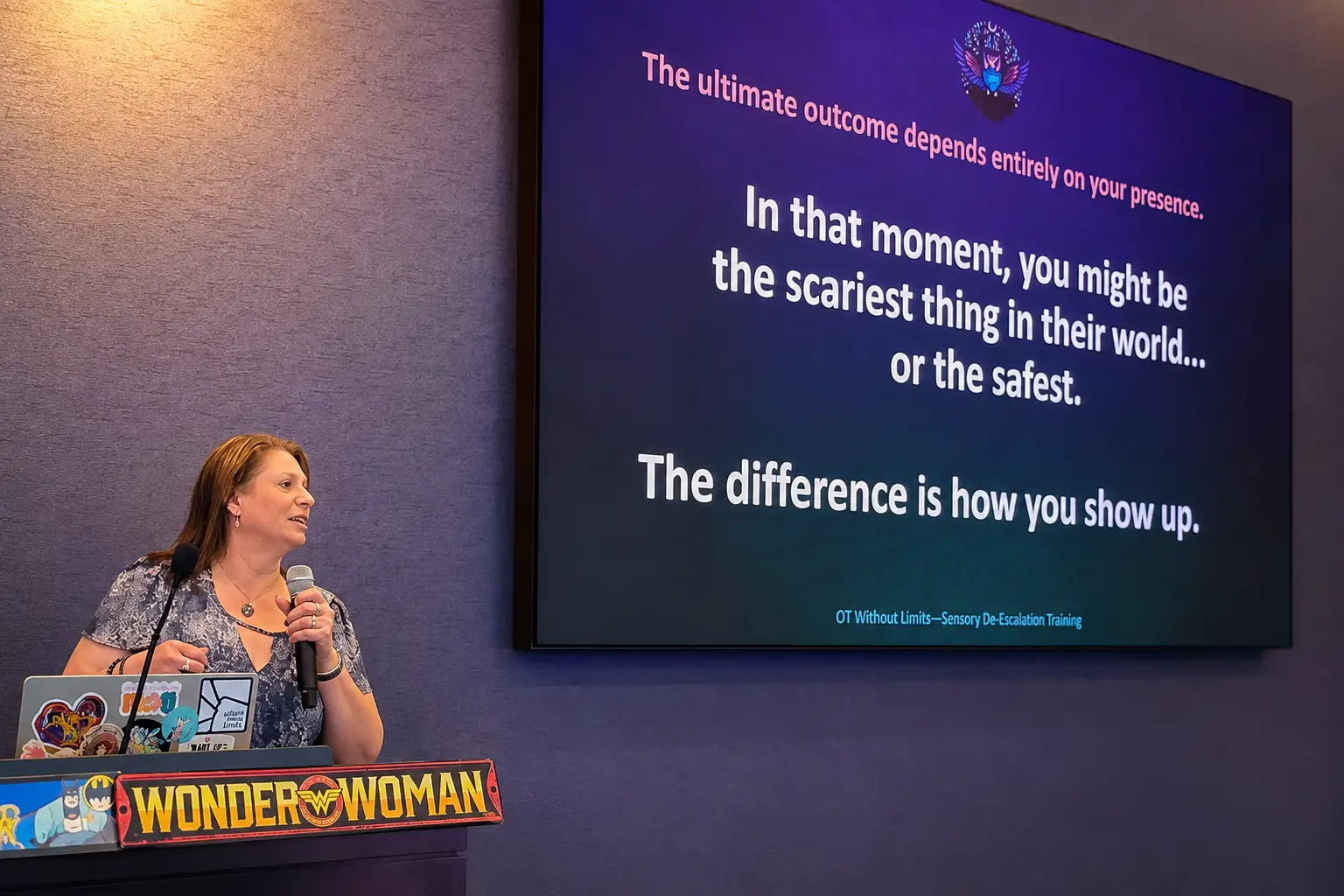
Dr Carrie Punger speaking into a microphone at a podium beside a large presentation screen displaying a quote about presence and sensory de-escalation training from OT Without Limits.

What First Responders Should Know About Autistic Children in Crisis

A meltdown can look like defiance from the outside. These field-tested shifts help first responders keep interactions safe and calm for everyone.