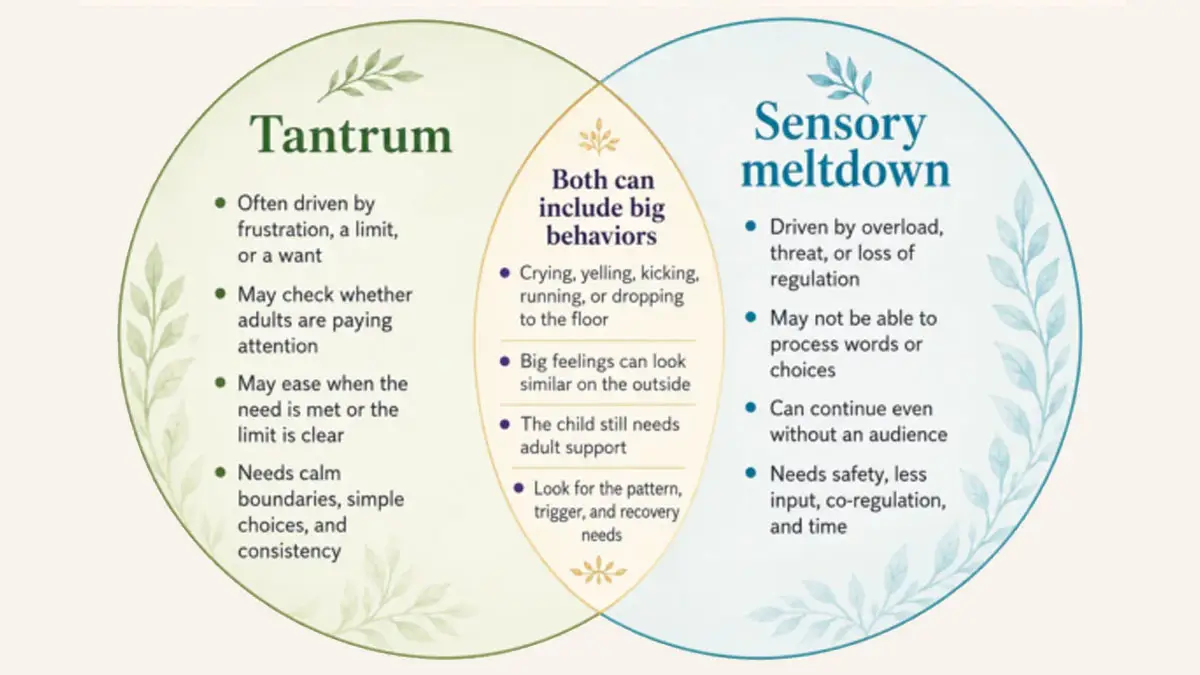

The first few weeks of school are a major adjustment—even when children are excited to return. New routines, increased expectations, sensory demands, and social changes can leave children tired, emotional, or overwhelmed.
- Return to predictable routines. Keep wake-up, meals, homework, bedtime, and morning departure times as consistent as possible.
- Prepare everything the night before. Lay out clothes, pack the backpack, fill water bottles, and place shoes by the door to reduce morning stress.
- Use a simple visual checklist. Include only essential steps, such as get dressed, eat breakfast, brush teeth, pack backpack, and put on shoes.
- Expect after-school restraint collapse. Children may hold themselves together all day and release their emotions once they feel safe at home. This is not necessarily misbehavior.
- Offer decompression before questions. Give your child a snack, movement, quiet time, or outdoor play before asking about homework or their day.
- Ask specific questions. Instead of “How was school?” try:
- “What made you laugh today?”
- “What was the hardest part?”
- “Who did you sit with?”
- “When did your body feel calm?”
- Protect sleep. School-aged children may need an earlier bedtime during the first several weeks while their bodies adjust to the increased physical and mental demands.
- Build movement into the day. Jumping, climbing, swinging, biking, pushing, pulling, and outdoor play can support attention and emotional regulation.
- Keep evenings lighter. Avoid overscheduling when possible. Children may need extra downtime while adapting to school expectations.
- Practice independence gradually. Let your child help pack their lunch, choose clothing, organize supplies, open containers, and manage their backpack.
- Check backpack fit. Both straps should be used, the backpack should sit close to the body, and heavier items should be placed near the child’s back.
- Create a calm homework area. Reduce visual distractions, provide supportive seating, and allow short movement breaks rather than expecting long periods of sitting.
- Stay connected with the teacher. Share helpful information about your child’s strengths, sensory needs, communication style, and strategies that work at home.
- Watch for patterns—not isolated hard days. Temporary fatigue, irritability, and resistance are common. Ongoing distress, sleep changes, physical complaints, school refusal, or significant behavioral changes may need additional support.
- Celebrate effort and adjustment. Praise flexibility, persistence, kindness, independence, and asking for help—not just grades or completed work.
The goal during the first few weeks is not perfection. It is helping children feel safe, connected, regulated, and confident as they settle into their new routines.